Personalized Medical Care & Dedicated International Patient Concierge

Medical Guide
Sterility and Viability Testing in Stem Cell Sourcing
Learn what stem cell sterility testing and viability testing mean, why they matter for safety, and how to compare clinics on quality infrastructure.
Schedule a ConsultationMedically reviewed by Dr. Seok Lee, Lead Physician, Pentaheal Medical Group
If you are researching cell-based therapy, one of the most useful questions you can ask is a quiet, technical one: how does a clinic confirm that the cells it uses are clean and alive before they go into your body? Stem cell sterility testing and stem cell viability testing sit at the center of that answer. These two checks are part of the quality infrastructure that separates a carefully run program from one that skips steps, and understanding them can help you compare clinics on something more meaningful than marketing. This article explains what these tests mean, why they matter for safety, and how Pentaheal Medical Group in Seoul describes its own documented practice around licensed stem cell quality control.
Before going further, an important note on framing. Regenerative and stem-cell therapies are not approved by the U.S. Food and Drug Administration (FDA) as proven treatments for specific diseases, and the sections below describe quality-control concepts rather than any promised result. Testing that confirms cells are sterile and viable is about safety and product quality; it does not, on its own, establish that a therapy works.
What sterility testing means
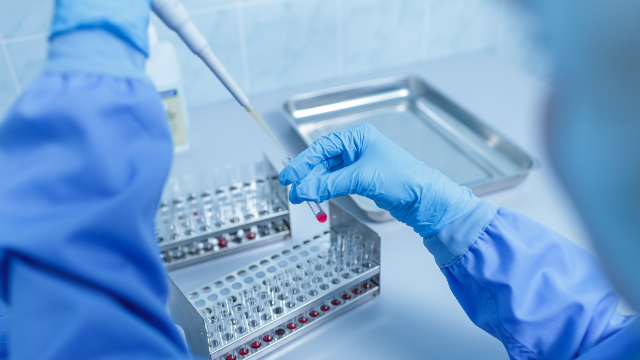
Sterility testing is the process of screening a cell product for microbial contamination — bacteria, fungi, and other organisms that should never be present in something prepared for injection or infusion. Because cells are living material that is collected, handled, and sometimes cultured in a laboratory, there are several points along the way where contamination could theoretically be introduced. Sterility testing is designed to detect that contamination so a compromised product is not administered.
Why does this matter so much? A contaminated cell product delivered into the body can cause serious infection. The FDA has repeatedly emphasized that unapproved cell and tissue products carry real safety risks, including infections, when they are not manufactured and tested under appropriate controls. Sterility testing is one of the safeguards that exists specifically to reduce that risk. For a patient comparing clinics, the presence of documented sterility testing is a signal that a facility treats cell products as medical products that must meet quality standards — not as something to be assembled casually.
Sterility is also closely tied to how a product is prepared. A sterile result at the end depends on sterile handling throughout: clean-room or controlled compounding conditions, appropriate technique, and components that are themselves of suitable quality. In other words, sterility testing is the confirmation step at the end of a process that is supposed to protect sterility from the beginning.
What viability testing means
Viability testing answers a different question: are enough of the cells in a product actually alive and functional? Cells can be damaged or die during collection, processing, storage, or transport. A product might be perfectly sterile yet contain a large proportion of non-viable cells. Viability testing measures the fraction of living cells so that a clinic can confirm the product meets a defined threshold before it is used.
This matters for two reasons. First, from a quality standpoint, a product with poor viability is not the product it is supposed to be — it does not match its own specification. Second, viability is part of characterizing a cell product honestly. Regenerative approaches are studied on the premise that living cells contribute to biological processes; a product with low viability cannot be described as delivering what its label suggests. Confirming viability is therefore a basic step in responsible cell handling, even though — and this is worth repeating — viability confirmation says nothing about whether a given therapy is effective for any condition.
Together, sterility testing and viability testing form a paired quality check: one confirms the product is clean, the other confirms it is alive in sufficient proportion. Neither replaces the other, and neither substitutes for the larger question of medical appropriateness, which is decided through physician evaluation.
Why licensed sourcing and donor screening matter
Where cells come from is just as important as how they are tested afterward. In the United States, human cells and tissues intended for implantation, transplantation, infusion, or transfer are regulated by the FDA as human cells, tissues, and cellular and tissue-based products (HCT/Ps) under 21 CFR Parts 1270 and 1271. Under these rules, tissue establishments are required to screen and test donors, to follow written procedures designed to prevent the spread of communicable disease, and to keep records. The FDA has published rules establishing donor eligibility requirements and current good tissue practice (CGTP) precisely to reduce the risk of transmitting infectious disease through cell and tissue products.
Donor screening and donor testing are the front end of this safety chain. The FDA describes testing donors of HCT/Ps for relevant communicable disease agents as a core requirement, so that products carrying a risk of transmissible infection are identified and excluded. "Licensed" or accredited sourcing — obtaining cells through a properly regulated and registered establishment rather than an informal channel — is what makes donor screening, testing, and traceability possible in the first place. When a clinic says it uses licensed biobank sourcing, it is describing this front-end infrastructure: cells that arrive with documented screening rather than unknown provenance.
It is worth being clear that these particular FDA regulations describe the U.S. framework. A clinic operating in South Korea works under Korean law, and Korean regulatory designations are not the same as U.S.-FDA approval. The FDA's HCT/P and good tissue practice pages are cited here as authoritative background on why donor screening, sterility, and product testing matter for cell-based products in general — not as a claim that any specific overseas clinic is FDA-regulated.
How Pentaheal Medical Group describes its practice
Pentaheal Medical Group is a reservation-based functional and regenerative medicine clinic in the Seocho District of Seoul, South Korea. According to the clinic's own materials, its regenerative work is built on a diagnostics-first model and delivered with several documented quality-control practices that are relevant to this topic.
On sourcing and testing, the clinic states that it uses licensed biobank cell sourcing with sterility and viability testing before administration, and describes its regenerative offering as a non-surgical mesenchymal stem cell (MSC) approach. On preparation and delivery, the clinic states that its infusion therapies are prepared under sterile compounding conditions using pharmaceutical-grade components, with concentration and quality verified before administration. During infusion, ozone, and stem cell treatments, the clinic states that vital signs are monitored, physician supervision is maintained throughout, and protocols can be adjusted in real time. The clinic also performs pre-treatment screening before therapy.
The clinic further states that it operates within South Korea's regulatory framework for regenerative medicine, alongside Ministry of Health and Welfare registration as a medical institution for attracting foreign patients. As noted above, these are Korean designations and are not equivalent to U.S.-FDA approval of a therapy's effectiveness.
Being transparent about what is not published is part of responsible comparison. The clinic's public materials do not specify the exact stem cell source in full detail — for example, whether cells are autologous or allogeneic, or the specific tissue of origin beyond the MSC description — nor do they name the specific laboratory, processing technology, or manufacturer. If those specifics matter to you, they are appropriate questions to raise directly. You can begin that conversation through the clinic's contact page, and confirm the exact source, testing methods, and documentation during a paid in-person consultation. Cost and candidacy are also determined at consultation rather than quoted in advance.
Questions to ask when comparing clinics on quality
If you are at the research stage, quality infrastructure is one of the more objective things you can compare. Reasonable questions include:
- Is there documented sterility testing of the cell product, and is contamination testing performed before administration?
- Is viability confirmed before use, and against what threshold?
- Where do the cells come from, and is the source a licensed, screened, and traceable establishment?
- What donor screening and communicable-disease testing are performed at the source?
- How is the product prepared — under sterile or controlled compounding conditions, with appropriate-grade components?
- Is a physician present and are vital signs monitored during administration?
- What pre-treatment screening is done to determine whether you are a suitable candidate?
A clinic that can answer these clearly is demonstrating the kind of quality culture that testing exists to support. You can read more about Pentaheal's diagnostics-first model on the clinic's English-language site, and then bring your specific questions to a consultation.
An honest word on what testing does and does not tell you
Sterility and viability testing are about product safety and quality. They help ensure that what is administered is clean and contains living cells in the expected proportion. What they cannot do is prove that a regenerative therapy will treat, cure, or improve any particular medical condition. The FDA has cautioned consumers that many stem-cell and regenerative products being marketed are unapproved and that their safety and effectiveness have not been established for the uses being advertised. Individual results vary, and no responsible clinic can guarantee an outcome.
For patients, the practical takeaway is to hold two ideas at once. Quality-control infrastructure — licensed sourcing, donor screening, sterility testing, viability testing, sterile preparation, and physician monitoring — is genuinely important and worth asking about. At the same time, strong quality control is a safety foundation, not evidence of efficacy. Both realities should inform your decision, together with a thorough physician evaluation of whether any regenerative approach is appropriate for you at all.
The Bottom Line
- Sterility testing screens a cell product for microbial contamination; viability testing confirms a sufficient proportion of living, functional cells. Together they are core safety and quality checks in cell-based therapy.
- Licensed sourcing and donor screening matter because they make traceability and communicable-disease testing possible; the FDA regulates human cells and tissues (HCT/Ps) with donor-eligibility and good tissue practice requirements for exactly these reasons.
- Pentaheal Medical Group states that it uses licensed biobank cell sourcing with sterility and viability testing, sterile compounding with pharmaceutical-grade components, pre-treatment screening, and physician supervision with vital-sign monitoring.
- The clinic does not publicly detail the exact cell source, lab, or processing technology; confirm these at a paid in-person consultation. Korean regulatory designations are not U.S.-FDA approval.
- Quality-control testing supports safety but does not prove effectiveness. Regenerative therapies are not FDA-approved for effectiveness, results vary, and no outcome can be guaranteed.
Frequently Asked Questions
**What is stem cell sterility testing?**Sterility testing is a check for microbial contamination — such as bacteria or fungi — in a cell product before it is administered. Its purpose is to help prevent infections that can occur if a contaminated product is injected or infused. It is a safety and quality step, not a measure of whether a therapy is effective.
**What does stem cell viability testing confirm?**Viability testing measures the proportion of cells in a product that are alive and functional. A product might be sterile but still contain many non-viable cells, so viability is confirmed separately to ensure the product meets its intended specification before use.
**Does passing sterility and viability testing mean the therapy works?**No. These tests address product safety and quality only. They do not establish that a regenerative therapy will treat or improve any condition. The FDA notes that many marketed stem-cell products are unapproved and that their effectiveness has not been established.
**Why does licensed sourcing matter?**Licensed, regulated sourcing makes donor screening, communicable-disease testing, and traceability possible. The FDA regulates human cells and tissues as HCT/Ps and requires donor screening and testing to reduce the risk of transmitting infectious disease.
**What does Pentaheal Medical Group say about its quality control?**The clinic states that it uses licensed biobank cell sourcing with sterility and viability testing, prepares therapies under sterile compounding conditions with pharmaceutical-grade components, performs pre-treatment screening, and maintains physician supervision with vital-sign monitoring during treatment.
**Does the clinic disclose the exact cell source?**Not in full. The clinic describes a non-surgical mesenchymal stem cell (MSC) approach with licensed biobank sourcing, but its public materials do not specify every detail of the source, laboratory, or processing technology. These can be confirmed during a paid in-person consultation.
**Is a clinic in South Korea regulated by the U.S. FDA?**No. A Seoul clinic operates under South Korean law, and Korean designations are not equivalent to U.S.-FDA approval. FDA pages are referenced here for authoritative background on cell and tissue product safety, not to imply FDA oversight of an overseas clinic.
**How can I compare clinics on quality infrastructure?**Ask about documented sterility and viability testing, the sourcing and donor-screening chain, preparation conditions, pre-treatment screening, and whether a physician monitors you during administration. Clear, specific answers are a good sign; vague ones are worth further questions.
This article is for general informational purposes and does not constitute individualized medical advice. Consult a qualified physician about your specific condition.
More Articles
Continue reading our clinical guides.

Korean Board-Certified Care: Safety in Functional Medicine Standards
Chronic spine, joint, and cancer-related pain affects millions of families across South Korea.
Learn More

Functional Medicine Clinic Seoul Korea | PENTAHEAL Guide
Discover Seoul Korea's top functional medicine clinic for Americans. PENTAHEAL's complete guide to autoimmune, chronic disease and longevity programs in 2026.
Learn More

Metabolic Syndrome Treatment Seoul Korea: The PENTAHEAL Protocol
Seeking metabolic syndrome treatment Seoul Korea? PENTAHEAL Medical Group offers a 1:1 metabolic reset program led by Dr. Seok Lee. Book your consult today.
Learn More